| Registration |
Program
Schedule |
Contact
Us |
Directions |
Previous
Programs |
|
 |
Follow us on facebook.
Spring
2024 Program
In this year's program, learn about new research and exciting developments in ultra-dense matter, black holes, lasers in space, quantum dots, computer simulation, string theory, the periodic table and much more!
New: Registration before the first event necessary for minors
An event series for Texas High-School Students to go on a
journey of discovering how physics can help us understand nature!
18th Year Running!
Earn a certificate for sustained attendance!
View the program brochure
|
 |
Physics is a fundamental science to unravel the laws of nature so that
we improve our understanding and appreciation of the world around us from
the smallest to the largest scales.
You are cordially invited to attend the 18th edition of SMP to get unique
first-hand insights into how scientist push the frontiers of knowledge
on fundamental laws of physics, the phases of matter, the Universe, and
often unexpected applications.
Listen to and discuss with world-renowned scientists working at Texas A&M
University who have agreed to share their newest research in an entertaining
and understandable way.
Saturday Morning Physics is a National
Science Foundation-funded event series designed to indulge Texas
high school students in the fascinating subatomic world of modern physics.
No prerequisites necessary! (except for your
curiosity...)
Teacher participation encouraged! |
Format |
The format for each Saturday's program will be as follows:
9:30 Check-In
10:00 Lecture, followed by Q&A and/or quizzes/demos
The registration desk opens at 9:30am, and it is essential for each student
to register in person.
|
Programs and Schedule
|
2024 Program Listing
|
|
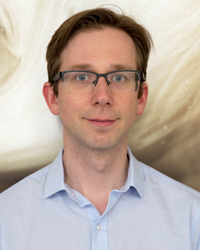 January 27th: "Ultra-Dense Matter", Professor Jeremy Holt
Neutron stars are remarkable astrophysical objects so dense they lie at the brink of collapsing into black holes. Matter under these extreme conditions has peculiar characteristics governed by a combination of general relativity and quantum physics. To deduce the composition of their exotic interiors, neutron stars can be observed through their electromagnetic, neutrino, and gravitational wave signals. In this talk, I will discuss the physics of neutron stars, what we understand of their properties from theoretical modeling, and what we might learn in the future with more detailed astronomical observations. |
|
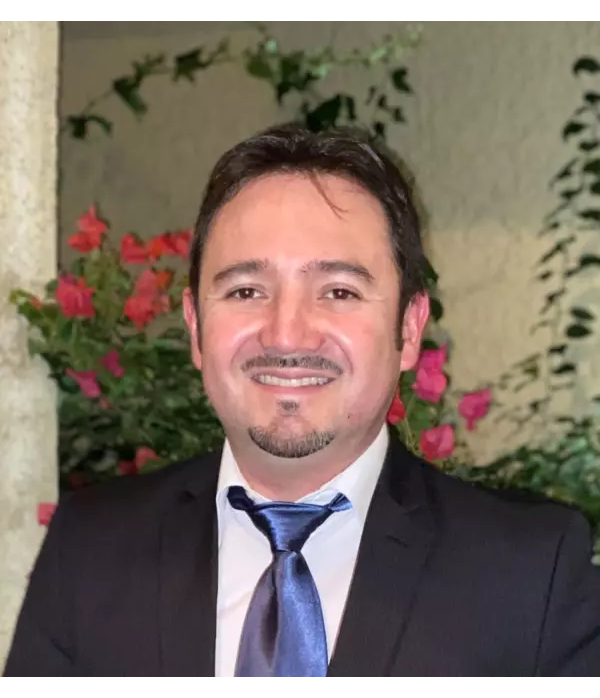 February 3rd: "Lasers in Space: Gravitational Astrophysics and Earth Observations", Professor Felipe Guzman
|
|
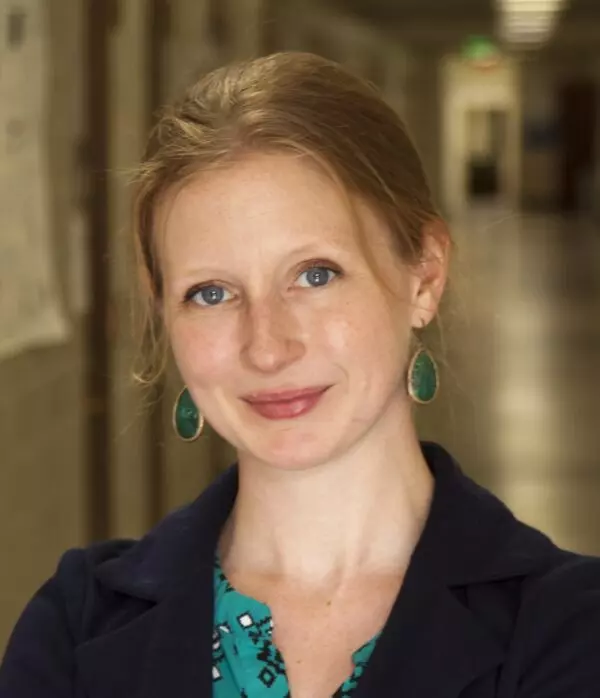 February 10th: "Centuries of Gravity: How We Learned to Read Light and Study Black Holes", Professor Krista Smith February 10th: "Centuries of Gravity: How We Learned to Read Light and Study Black Holes", Professor Krista Smith
For thousands of years, humans have attempted to explain the motion of the objects in the heavens. These motions are governed by gravity, a force with profound effects on the appearance, evolution, and fate of the cosmos. Over the past century, humans have discovered the most dramatic manifestation of gravity in nature – black holes, punctures in the fabric of space and time that can reveal secrets about deep physics. I will put our species' investigation of gravity into historical and scientific context, before explaining the modern tools, telescopes, and spacecraft that we use to understand the nature of supermassive black holes and their effect on the evolution of the galaxies in which they live.
|
|
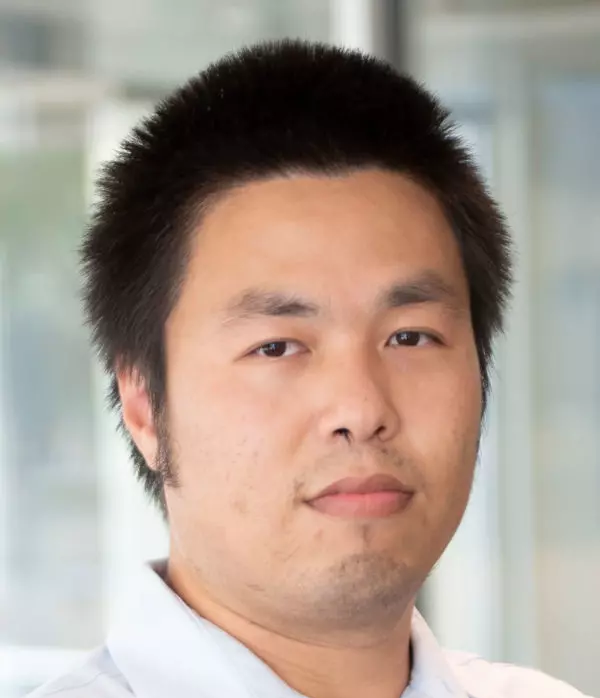 February 17th: "Simulating Physics on a Computer: from Simple Rules to Complex Phenomena", Professor Shenglong Xu February 17th: "Simulating Physics on a Computer: from Simple Rules to Complex Phenomena", Professor Shenglong Xu
Starting with the game Angry Birds, I will discuss the general idea of simulating the physical world around us on a computer and demonstrate how extremely complex phenomena can emerge from simple laws. Then, I will talk about the limitations of simulation due to quantum mechanics and how a quantum computer may help. I will conclude by surveying the current status of building a quantum computer.
|
|
 February 24th: "The Future of the Periodic Table", Professor Cody Folden February 24th: "The Future of the Periodic Table", Professor Cody Folden
The periodic table is one of our greatest scientific accomplishments. Although we associate it with chemistry, it is also a result of the laws of physics. Prof. Folden will discuss the history of the periodic table, how new elements are added to it, and what it might look like in the future. |
|
 March 2nd: "What is String Theory?" , Professor Ergin Sezgin March 2nd: "What is String Theory?" , Professor Ergin Sezgin
I will describe the basics of string theory and the motivations for it. I will especially elaborate on how the need for extra dimensions arises in string theory and the consequences.
The challenging open problems including the issue of experimental evidence, dark energy, dark matter, and the black hole singularity will also be discussed. |
|
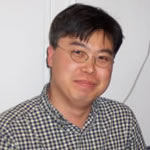 March
9th: "Quantum Dots: Nanostructure generating light and charges, Professor Dong Hee Son March
9th: "Quantum Dots: Nanostructure generating light and charges, Professor Dong Hee Son
Quantum dots, tiny semiconductor particles smaller than a hair's width, can create light of any color and even generate electricity, revolutionizing various technologies such as television, solar cells, and medicine. We'll explore their discovery, development, and 2023 Nobel Prize-recognized impact on our lives.
|
|
| |
Certificates and Prizes |
To
be awarded a final "diploma" certificate, you will need to complete
at least 5 out of 7 events. In addition, there is a common thread through
the event sequence, so that regular attendance is beneficial.
|
Registration |
Registration
is free . On-site registration
will be possible until 9:50 AM on the day of each event. There will
be open attendance allowed at each session.
We encourage all participants to register here before attending the first event. For minors, registration and acknowledgment of the liability waiver by a parent or custodian is mandatory due to university rules. Registration and attendance are free. Walk-in attendance is available for adults only
On-Line
Registration
|
Location and Directions |
Each program will be held at the Physics Department in the Hawking Auditorium of the George P. Mitchell Physics Building on the
campus of Texas A&M University in College Station, TX 77843.
Parking is available in the North Side Garage (adjacent to the venue). Visitor parking at the North Side Garage requires the purchase of a parking ticket at the vending machines close to the exits. Metered or free parking might also be found on city streets close by.
|
Contacts |
If you
have any questions about the Saturday Morning Physics program please contact:
Prof. Ralf Rapp (rapp@comp.tamu.edu)
Prof. Rainer Fries (rjfries@comp.tamu.edu)
Prof. Jeremy Holt (holt@comp.tamu.edu)
Phone: 979-845-1411 |
| |
|
|
|
|
Links to other Saturday Morning Physics Programs |
| |
|
|
|
|
| Fermilab: https://indico.fnal.gov/conferenceDisplay.py?confId=4692
Florida State University: http://www.physics.fsu.edu/Education-Outreach2/Saturday-Morning-Physics
University of Michigan: http://www.lsa.umich.edu/physics/events/saturdaymorningphysics
Darmstadt University (Germany): http://www.satmorphy.de
|
Acknowledgements |
| |
|
|
|
|
Thanks to the following individuals and institutions for their generous support:
Paula Barton, Shana Hutchins, and Bruce Hyman.
The Cyclotron Institute and the
Department of Physics at Texas A&M University, CENTAUR, and the National Science Foundation
|